Les amours imaginaires
Director: Xavier Dolan
Cast: Xavier Dolan, Monia Chokri, Niels Schneider
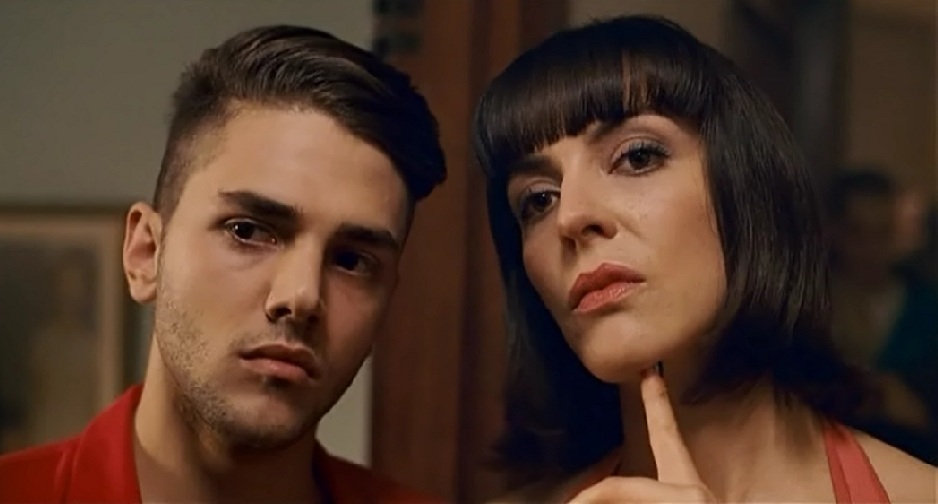
Les amours imaginaires tells the story of two long-time friends, Francis and Marie, whose friendship starts to crumble as they both meet and fall for Nicolas. Nicolas, who is “a country lad, new in town”, is a charming young man with curly blond hair and green eyes who seems to be interested equally in Marie and Francis. Francis, who himself is gay, can’t figure out whether Nicolas is actually reciprocating his emotions, or if he works his charms on everyone the same. Marie, also unable to understand the meaning of Nicolas’ friendly behaviour finds herself confused and torn between her friendship and her new found love.
Les amours imaginaires is a significant improvement for writer/director and lead actor Dolan. Whereas in his first feature, his artistic flourishes bordered on Wong Kar Wai rip-offs, here he channels his visualism in more emotive ways. It’s still evident that he adores Wai’s work and has watched Godard’s Pierrot le fou more than a couple of times, but this time around, these pretty pictures tell a story.
As I expected to see another film overdone with art-film imagery, I was pleasantly surprised with the film’s opening sequence. Dolan’s best decision is perhaps to thrust us indirectly into the story with the interviews at the beginning of the film. The film’s main narrative thread isn’t as vocal as these interviews, instead choosing to focus on silent moments of uneasy smiles, affectionate gazes or uncomfortably intimate encounters to tell the same story.
The film also owes the success of its visual storytelling to a large extent to the expressive performances by Chokri and Dolan and the expressionless, yet incredibly charming character of Nicolas acted superbly by Schneider. The standout performance however comes from Anne Dorval – Dolan’s mother in his first film – as Nicolas’s mother who appears in a single scene as she has breakfast coffee with Francis. The information she gives us is the only look we get into Nicolas’ ambiguous past, but on top of that, she’s so hilarious, we are only left wishing she never left the film.
Grade: B
Final Word: If you’ve missed Les amours imaginaires, try to find time for it. It’s a moving film with delightful treats for the eyes. Dolan is definitely a director to watch for. He’s certainly improved his storytelling techniques here as well and I hope he continues to work up this ladder in Laurence Anyway, his planned third feature.
On Tour
Director: Mathieu Amalric
Cast: Mathieu Amalric, Mimi Le Meaux, Evie Lovelle
If you feel like Cher and Christina Aguilera’s Burlesque doesn’t fill your appetite for that art, here you get another treat. Mathieu Amalric’s On Tour – a film that won him the best director prize at the Cannes film festival this past year – is an eccentric film that follows the lives of a group of burlesque dancers as they tour around France.
On Tour stars Amalric as Joachim, a formerly successful TV producer in France, hated by his colleagues upon his return from the States, who has brought along a group of burlesque dancers to his native country in the hope of getting his name back out there with the success of their shows. As they tour along the borders of France, Paris becomes more and more of a holy grail for the troupe, but Joachim finds it increasingly difficult to get the support he needs to take the group there. Meanwhile, his relationship with his young sons poses more problems on him as he tries to bond with them during the tour.
As with Les amours imaginaires, the film surprised me in being far from what I’d expected. I started watching it thinking it’s going to be a song and dance film, but aside from a few short glances into the actual stage performances, On Tour rarely depicts burlesque itself. Instead, it focuses on the behind-the-scene relationships between the members of the dance troupe, Joachim and his children. And in that lie both the strength and the weakness of the film. Strength because these interactions make for a compelling look at the reality behind the glamour of burlesque, which is all the more interesting because these are not actors playing burlesque dancers, but a real burlesque troupe. Weakness because the film feels rather self-indulgently long as a result of its lack of energy and glamour – two factors that drive a real burlesque show. Nevertheless, it’s interesting that the film itself is sort of a metaphor for its story. Like Joachim who tries to engage a French audience with an American art, Amalric wants us to look at this art from his revisionist perspective. On that account, On Tour is definitely a successful film.
Grade: B-
Final Word: On Tour is hardly urgent viewing. It’s an enjoyable film that works on many different levels but in the end, it’s not memorable or remarkable enough to generate any strong reactions. You’ll probably watch it, like it and then forget it. The burlesque troupe gets A pluses all around though.